
Foundations Isoball is Inspired by the RollerBlock

A one-stop solution to isolating your bookshelves and electronics.

The Isoball lends a nice roundness and density to the bass and midrange. It generally leaves the top end intact and does a little to add focus and improve microdetail.

Just as the cera ball, this can simply be placed under your electronic equipment, such as CDPs, pre-amplifiers and Integrated Amps or can also be placed under your stand mount speakers, offering another level of isolation.

Silicon, cork, and other polymer pads tend to sound muffled and slow, robbing the music of its detail and accuracy. The Isoball keeps both intact.

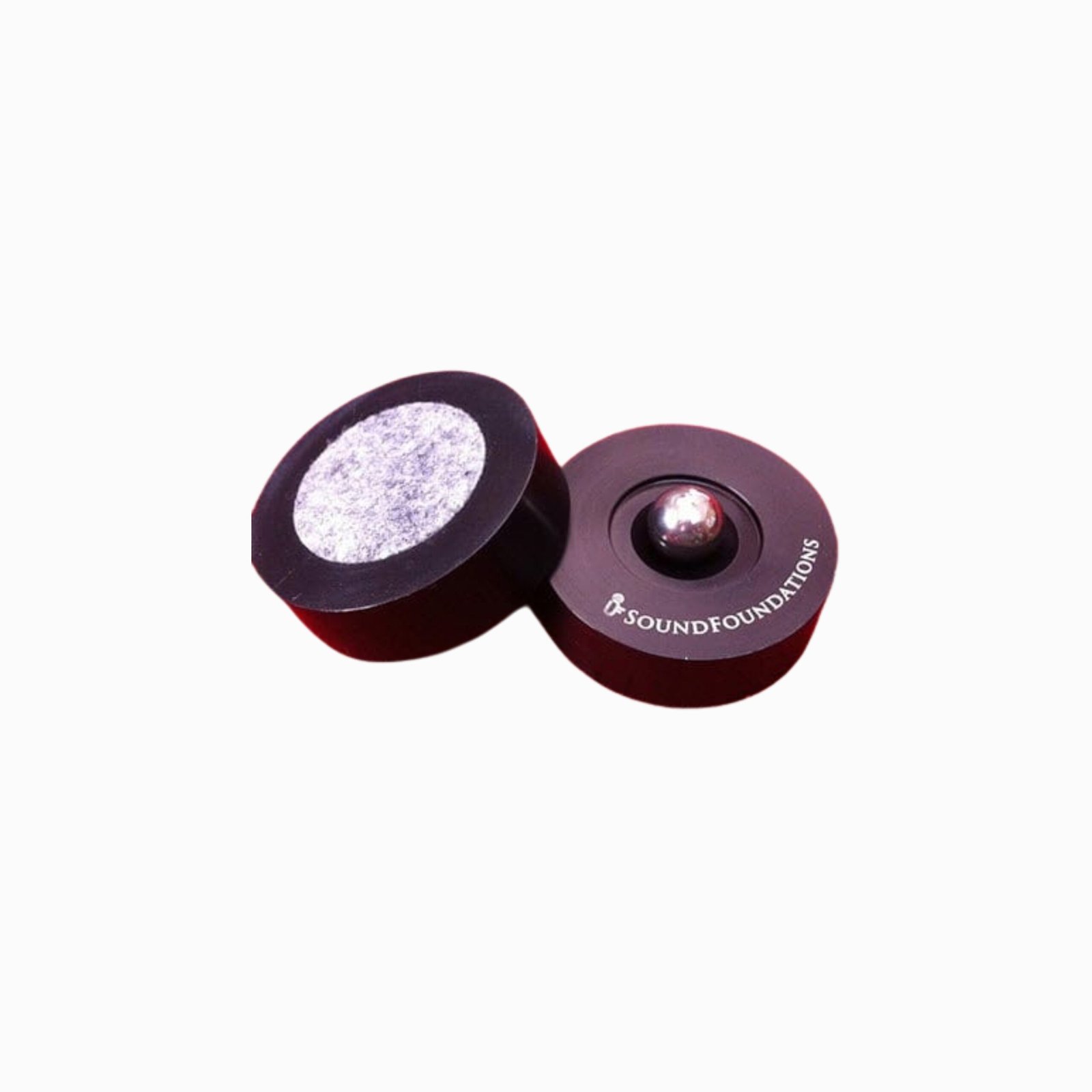
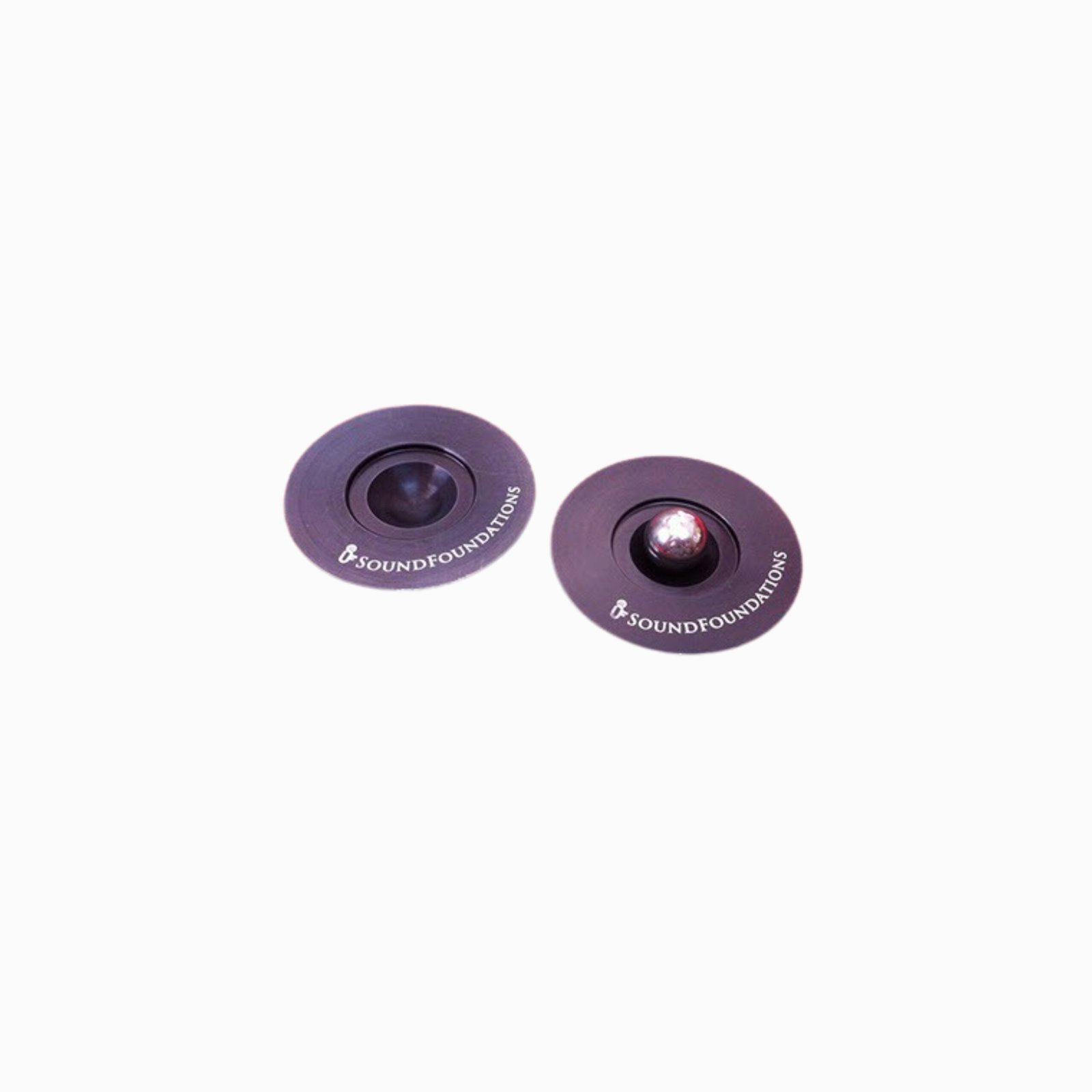
The isoball has 3 parts. An aluminium base cup, An Aluminium top cup and a Tungsten carbide ball. The combinations of these 3 composites work in harmony to produce the best results. Many hours of testing allowed us to fine-tune the cup curvature and the manner in which the ball locates inside the aluminium cup.

The Foundations isoball comes with an isofelt inlay on the base

Suggested Uses: Below stand mount speakers, Pre-amplifiers and DACs

Main Features:

  • CNC-machined Aluminium Alloy Cup
  • Load Capacity per set – 5-100kgs
  • Leaves no marks or dents on the speaker or chassis, as in the case of inverted spikes
  • Does not need to be stuck, hence glue marks are avoided


Product Specifications:

  • Diameter: 45mm
  • Height: 28mm
  • Sold in a Pack of 3 or a Pack of 4
  • Shipping weight: 1 kg

How to set up the rollerballs

In general, I’d say the following rules hold:

1. Ensure that you place the blocks under the heavy parts of the equipment. Put more blocks on the side (front/rear, left/right) which have more weight. Adjust them to get the centre of all your blocks matching the centre of gravity of the equipment.

2. Placing blocks more towards the periphery gives a calmer & melodious but also less open/dynamic sound. Moving them closer to the centre of the equipment will increase the openness and dynamics (including transients) but reduce clarity and microtones. Adjust accordingly to get the right mix.

3. Optimise the placement under the source (CD player) first and then work your way towards the power amp. To begin, place all close to the stock feet and then, starting with the source, start experimenting. Once you’ve optimised the placement under the source, move on to the pre. Once you’ve done all, you may want to do one more iteration if you are finicky.

Also, check that each block is under the flat bottom of the equipment. Don’t put a block under a screw or uneven surface. Once kept, shake the equipment a bit and see if all blocks are showing equal relative movement between the upper and the lower block. If it’s not free enough (all of them), you may need more blocks. If one/two blocks show less free movement than others, you may need to move the other blocks towards these blocks to share some of their weight.